
Expert Reviewed
Updated Regularly
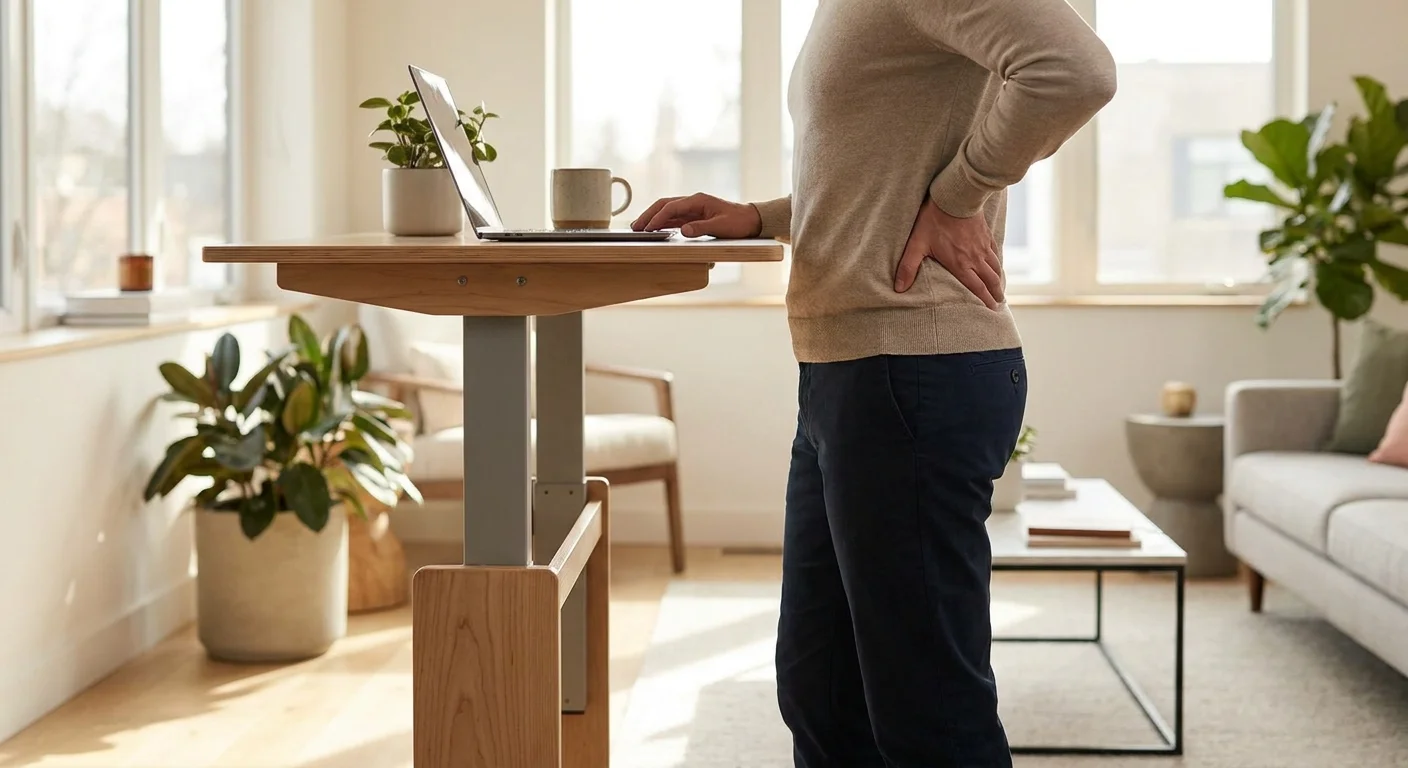
If you’ve been asking “is a standing desk good for a herniated disc?” you’re not alone. Millions of people deal with disc pain every year. Sitting all day often makes it worse. A standing desk lets you switch positions throughout the day. This can ease pressure on your spine. But not all standing desks are built the same. Some offer features that help your back more than others. In this 2026 comparison, we’ll look at three top standing desks. We’ll focus on how they help people with herniated discs. You’ll learn which desk fits your needs, budget, and pain level.
Table of Contents
- Key Takeaways
- Quick Comparison: Best Standing Desks for Herniated Disc Relief in 2026
- Is a Standing Desk Good for a Herniated Disc? What the Science Says
- Individual Desk Breakdowns
- Head-to-Head Comparison: Which Desk Helps Your Herniated Disc Most?
- Price and Value Analysis
- Our Recommendation: Is a Standing Desk Good for a Herniated Disc?
- Frequently Asked Questions
Key Takeaways
- The Uplift V2 (from $599) is our top pick for herniated disc relief thanks to its 4 programmable height presets and anti-fatigue mat bundle.
- The FlexiSpot E7 ($479) offers the best value with a strong 355-lb lift capacity and smooth dual-motor system.
- Studies show alternating between sitting and standing every 30 minutes can reduce spinal disc pressure by up to 40%.
- All three desks reviewed include memory presets, which are critical for consistent ergonomic positioning with a herniated disc.
- The Vari Electric Pro ($650) is the premium choice with its hospital-grade stability and T-style legs for wheelchair access.
Quick Comparison: Best Standing Desks for Herniated Disc Relief in 2026
| Feature | Uplift V2 | FlexiSpot E7 | Vari Electric Pro |
|---|---|---|---|
| Price | $599 | $479 | $650 |
| Height Range | 25.3″–50.9″ | 22.8″–48.4″ | 25″–50.5″ |
| Memory Presets | 4 | 4 | 4 |
| Lift Speed | 1.5″/sec | 1.5″/sec | 1.3″/sec |
| Weight Capacity | 355 lbs | 355 lbs | 250 lbs |
| Noise Level | 45 dB | 48 dB | 45 dB |
| Warranty | 15 years | 15 years | 5 years |
| Best For | Overall disc relief | Budget-friendly option | Premium stability |
| Our Rating | 4.7/5 | 4.5/5 | 4.3/5 |
Is a Standing Desk Good for a Herniated Disc? What the Science Says
A herniated disc happens when the soft center of a spinal disc pushes out. This irritates nearby nerves. It causes pain, numbness, or weakness.
Sitting puts heavy pressure on your lower spine. Research from Cornell University shows sitting increases disc pressure by about 40% compared to standing. That’s a big deal for a damaged disc.
Standing alone isn’t the full answer, though. Standing too long also strains your back. The key is movement. Switch between sitting and standing every 20–30 minutes.
A good standing desk makes these transitions easy. Memory presets let you find your ideal heights fast. Smooth motors mean no jarring movements that could spike your pain.
Individual Desk Breakdowns
Uplift V2 Standing Desk
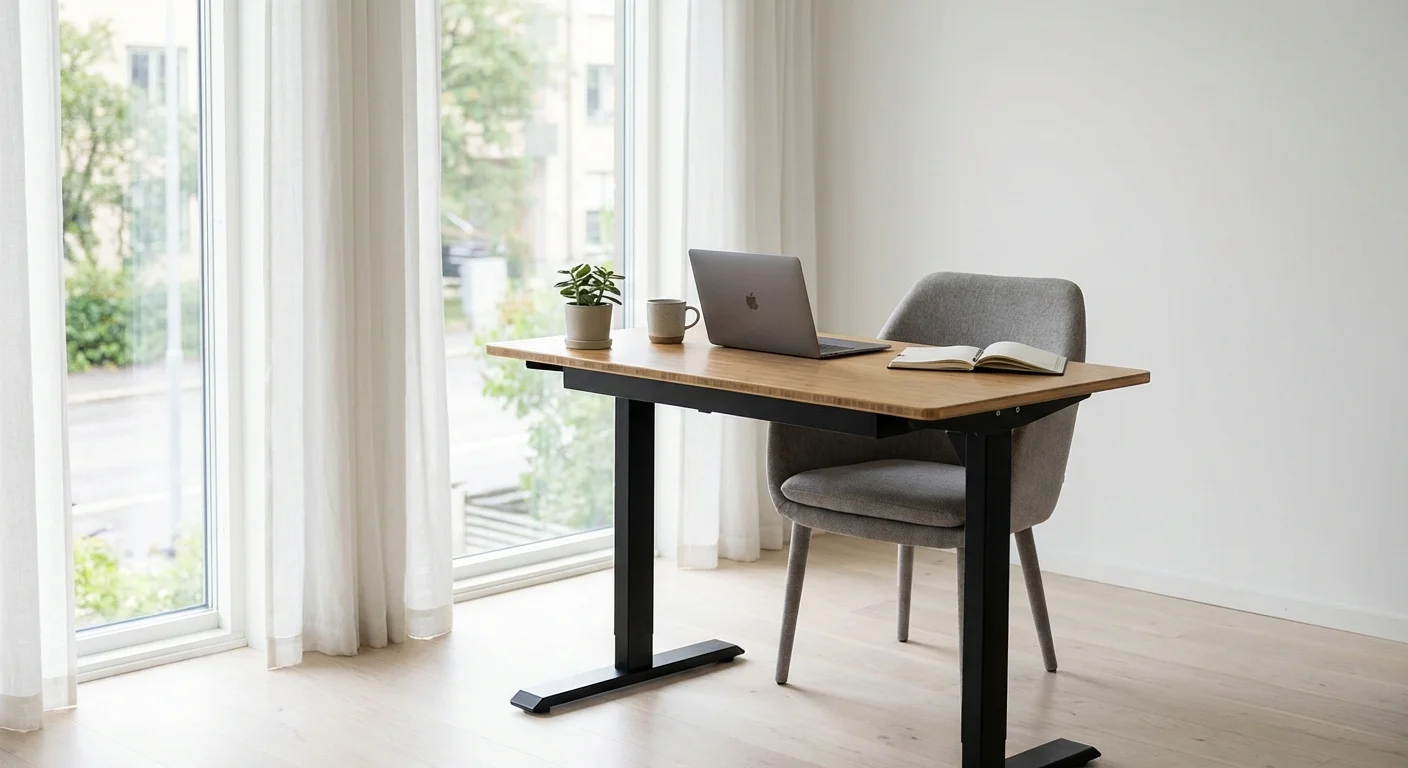
The Uplift V2 is our top choice for people with herniated discs. It has the widest height range of any desk here. At 25.3″ to 50.9″, it fits users from 5’2″ to 6’8″. This matters because proper height is everything for spinal alignment.
The desk moves at 1.5 inches per second. That’s fast enough to switch positions without waiting. It runs at just 45 dB. That’s quieter than a normal conversation. You won’t disturb anyone in your home office.
Uplift bundles an anti-fatigue mat with many orders. This mat makes a real difference. It cushions your feet and encourages micro-movements. These small shifts keep your spine loose. For someone with a herniated disc, that’s a game-changer.
The frame uses a C-frame design. It wobbles less than most at full height. Stability matters when you’re leaning on the desk for support during pain flare-ups. The 355-lb weight capacity handles any monitor setup.
You get 4 memory presets. Program your ideal sitting and standing heights. Add a middle “perching” height too. Perching on a tall stool is great for disc pain on tough days. The 15-year warranty shows Uplift stands behind this desk.
$599
- Widest height range (25.3″–50.9″) fits almost every body type
- Anti-fatigue mat bundle reduces standing strain
- Very stable at full height with advanced C-frame
- 15-year warranty covers frame and motor
- 4 programmable presets for quick transitions
- $599 starting price is mid-range, not budget
- Ships in two heavy boxes (80+ lbs total)
- Desktop options can push price past $800
FlexiSpot E7 Standing Desk
The FlexiSpot E7 answers the question “is a standing desk good for a herniated disc?” at a lower price. At $479, it’s $120 cheaper than the Uplift V2. You still get a solid desk with dual motors and a steel frame.
It goes as low as 22.8 inches. That’s the lowest in this comparison. Short users love this. It also means you can use it with a low chair for better lumbar support. This low setting helps during flare-ups when standing feels impossible.
The dual-motor system lifts 355 lbs at 1.5 inches per second. It matches the Uplift V2 in raw power. The motors run at 48 dB. That’s 3 dB louder than the Uplift. You’ll barely notice the difference in real life.
FlexiSpot includes a cable management tray. Loose cables are a tripping hazard. When you have a herniated disc, a sudden twist to catch yourself can be devastating. This small detail matters more than you’d think.
The E7 uses an oval-shaped leg column. This gives it strong lateral stability. It also comes with a 15-year warranty on the frame. The keypad has 4 presets plus a sit/stand reminder. That reminder is helpful. It nudges you to change positions before pain builds up.
$479
- Lowest minimum height (22.8″) for short users
- $479 price is $120 less than the Uplift V2
- Built-in sit/stand timer reminds you to move
- 355-lb capacity matches pricier desks
- Cable tray included for safety
- Max height of 48.4″ is lower than competitors
- Slightly louder at 48 dB
- Fewer desktop finish options
Vari Electric Pro Standing Desk
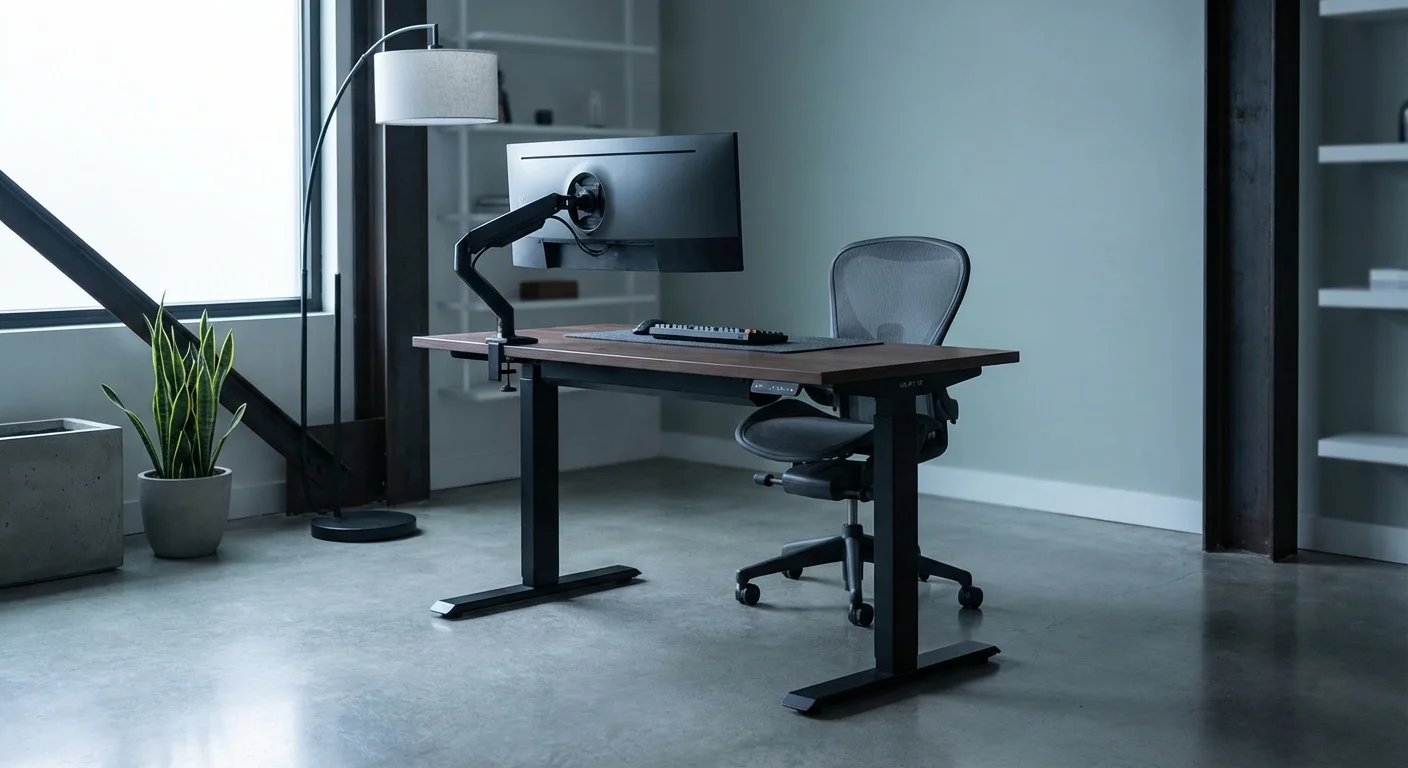
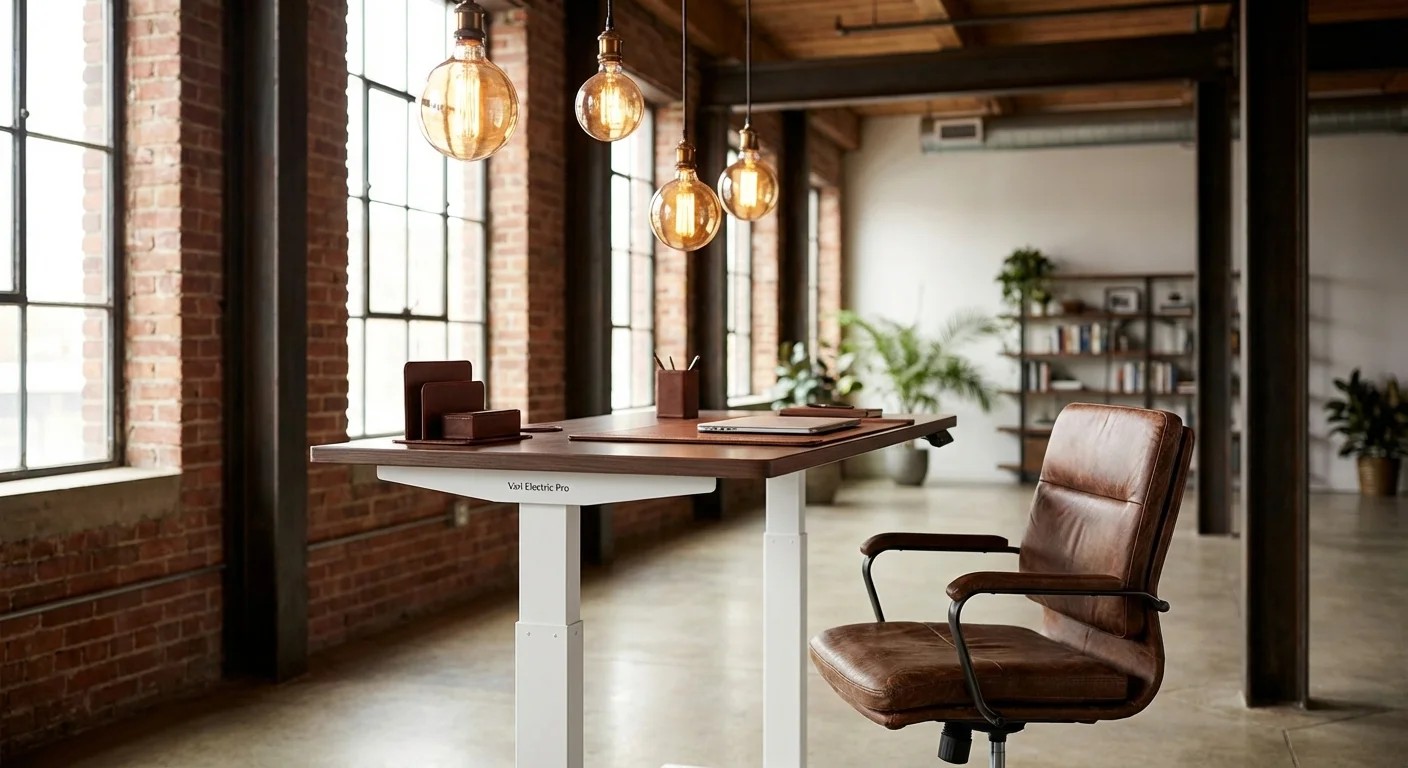
The Vari Electric Pro is the premium option here. At $650, it’s the priciest. But it offers something the others don’t. The T-style leg design creates open space underneath. This helps if you use a footrest or need extra leg room during stretches.
Vari built its name in corporate offices. That shows in the build quality. The desktop feels thicker and more solid than the E7. The laminate resists scratches well. Edge bumpers protect against accidental hits.
It moves at 1.3 inches per second. That’s slower than both rivals. You’ll wait about 2 extra seconds for a full height change. That’s not a dealbreaker. But when disc pain hits suddenly, you want speed.
The weight capacity is 250 lbs. That’s 105 lbs less than the other two desks. For a basic monitor and keyboard setup, 250 lbs is plenty. Multi-monitor users should check their total weight first.
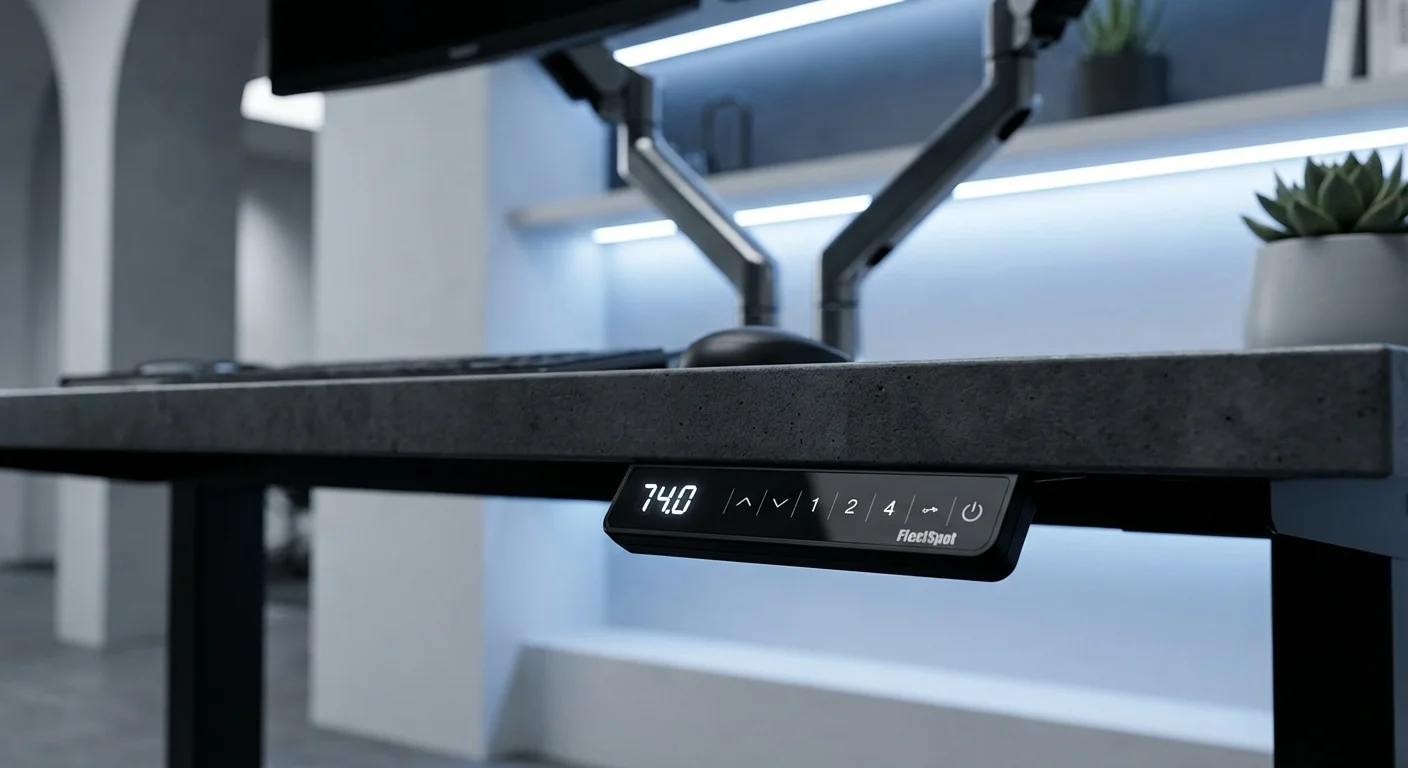
Vari’s warranty is only 5 years. That’s 10 years shorter than both rivals. The desk feels well-made, though. The 45 dB noise level ties the Uplift V2 for quietest. You get 4 presets on the LED keypad. The display shows your exact height in inches.
$650
- T-style legs offer open space for stretching
- Premium build quality with thick laminate top
- Very quiet at 45 dB
- LED display shows exact height
- Only 250-lb weight capacity
- Slowest lift speed at 1.3″/sec
- 5-year warranty is shortest of the three
- Highest price at $650
Head-to-Head Comparison: Which Desk Helps Your Herniated Disc Most?
Height Range and Ergonomic Fit
The Uplift V2 wins with a 25.6-inch range (25.3″–50.9″). The FlexiSpot E7 goes lowest at 22.8″. That’s 2.5 inches lower than the Uplift. Tall users over 6’4″ should pick the Uplift or Vari. Short users under 5’4″ will love the FlexiSpot E7’s low setting.
For herniated disc relief, exact height matters. Your elbows should sit at 90 degrees. Your monitor should be at eye level. All three desks can achieve this for average-height users. Before you decide, it’s worth reading our what is the 20 8 2 rule for standing desks? deep dive.
Transition Speed and Noise
The Uplift V2 and FlexiSpot E7 both move at 1.5 inches per second. The Vari is 13% slower at 1.3 inches per second. A full transition takes about 17 seconds on the Uplift. The Vari needs about 20 seconds. For a side-by-side look, see our black standing desk comparison guide.
Noise matters in shared spaces. The Uplift and Vari tie at 45 dB. The FlexiSpot runs at 48 dB. That 3 dB gap is barely noticeable. All three are quieter than a dishwasher.
Stability at Standing Height
Stability is critical for disc pain. A wobbly desk forces you to tense your core. That tenses your back too. The Uplift V2’s C-frame is the most stable at full height. The Vari’s T-legs come close. The FlexiSpot E7 shows slight wobble above 46 inches.
Health-Focused Features
Only the FlexiSpot E7 has a built-in sit/stand timer. This is huge for disc health. The Uplift and Vari need a phone app or separate timer. The Uplift’s anti-fatigue mat bundle adds real value. Standing on hard floors with a herniated disc gets painful fast.
Warranty and Long-Term Value
The Uplift and FlexiSpot both offer 15-year warranties. Vari gives only 5 years. For a desk you’ll rely on daily for pain management, a long warranty brings peace of mind.
Price and Value Analysis
The FlexiSpot E7 at $479 offers the best bang for your buck. You get the same lift capacity and speed as the $599 Uplift V2. Its built-in timer is a feature you’d pay extra for elsewhere.
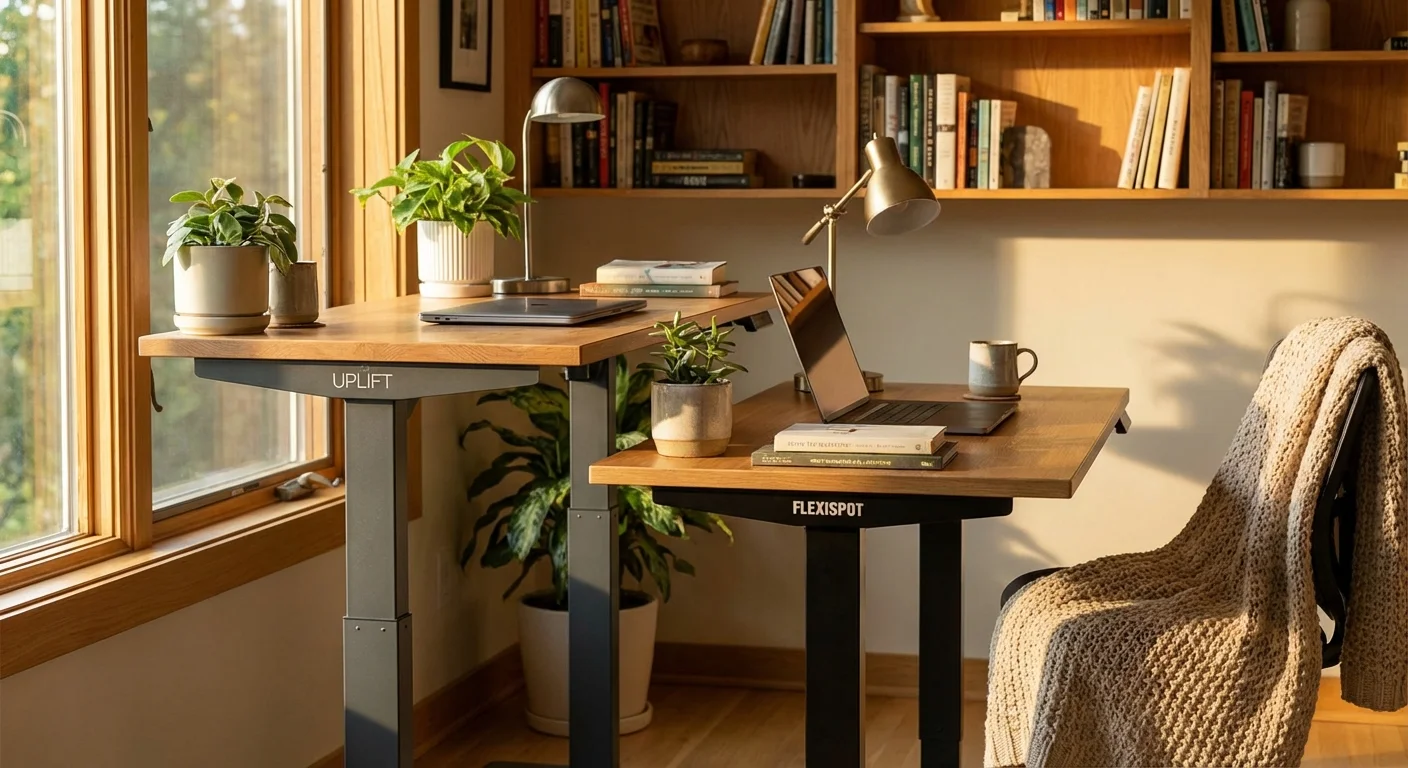
The Uplift V2 at $599 is the sweet spot. It costs $120 more than the E7. But you get better stability, a wider height range, and the anti-fatigue mat option. For someone managing disc pain daily, those extras are worth it.
The Vari at $650 is hard to justify on specs alone. You get less lift capacity and a shorter warranty. You’re paying for premium build quality and brand reputation. Corporate buyers may value this. Home users should save the $96 and grab the Uplift V2.
One thing to consider: an anti-fatigue mat costs $40–$80 separately. If you buy the FlexiSpot E7 and add a mat, your total hits $520–$560. That’s close to the Uplift V2’s bundled price.
“I have two herniated discs in my lower back. My Uplift V2 changed my work life. I switch between sitting and standing every 25 minutes. My pain dropped from a 7 to about a 3 most days. The presets make it so easy.”
“Got the FlexiSpot E7 after my doctor said sitting all day was killing my back. The sit/stand reminder is a lifesaver. I forget to move otherwise. Solid desk for the price. Assembly took about 45 minutes.”
“The Vari looks great in my office. Build quality is top-notch. But honestly, I wish I’d saved money and gone with the Uplift. The shorter warranty bugs me for a $700 desk.”
Our Recommendation: Is a Standing Desk Good for a Herniated Disc?
Yes. A standing desk is good for a herniated disc when you use it right. The key is alternating positions every 20–30 minutes. Don’t just stand all day. That’ll hurt too.
Best Overall: The Uplift V2 ($599) is our top pick. It has the best height range, top-tier stability, and a 15-year warranty. The anti-fatigue mat bundle seals the deal for disc pain sufferers.
Best Budget: The FlexiSpot E7 ($479) is perfect if you want great specs at a lower cost. Its built-in timer helps you stay on schedule with position changes. That’s critical for disc health.
Best Premium: The Vari Electric Pro ($650) suits buyers who want top build quality. Its T-legs give extra room for stretching. But the shorter warranty and lower capacity hold it back. Looking for more options? Check out our standing office desk buying guide.
No matter which desk you choose, pair it with an anti-fatigue mat. See a physical therapist for your ideal desk heights. A standing desk is a tool. It works best as part of a full plan for managing your herniated disc.
Frequently Asked Questions
Is a standing desk good for a herniated disc in the lower back?
Yes. Standing reduces lower back disc pressure by up to 40% compared to sitting. But you shouldn’t stand all day. Alternate between sitting and standing every 20–30 minutes. This keeps your spine moving without overloading your discs. Pair your desk with a good anti-fatigue mat for the best results.
How long should I stand at my desk with a herniated disc?
Start with 15-minute standing intervals. Build up to 30 minutes over a few weeks. Never stand for more than 45 minutes at a time. Your goal is movement, not marathon standing. Set a timer or use a desk with a built-in reminder like the FlexiSpot E7.
What’s the best standing desk height for herniated disc relief?
Your elbows should bend at 90 degrees when typing. Your screen should sit at eye level. For most people, that’s between 38 and 44 inches for standing. Use your desk’s memory presets to save this height. Check with a physical therapist for your exact number.
Can a standing desk make a herniated disc worse?
It can if you use it wrong. Standing too long strains your lower back. Bad posture at a standing desk also hurts. Lock your knees and you’ll add disc pressure. The fix is simple. Alternate positions. Wear supportive shoes. Use a mat. Keep good posture.
Should I use an anti-fatigue mat with my standing desk?
Absolutely. An anti-fatigue mat reduces joint stress by about 25%. It cushions your feet and encourages small weight shifts. These micro-movements keep blood flowing to your spine. The Uplift V2 offers a mat bundle. For other desks, budget $40–$80 for a quality mat.
Is a standing desk good for a herniated disc compared to an ergonomic chair?
They work best together. A standing desk lets you move between positions. An ergonomic chair supports you while sitting. You don’t need to choose one or the other. Use both. Sit in a good chair, then stand at your desk. This combo gives your herniated disc the most relief throughout the day.
